Form cover
Page 1 of 1

IMAQA Research Ice Ship

Current polar research often rely on fixed stations, aircraft support, or heavy traverses, which can limit access to remote areas and require significant logistical resources and fuel.

IRIS (IMAQA Research Ice Ship) is a concept being explored by IMAQA: a low-emission mobile platform designed to support scientific operations on ice sheets and polar environments.

The objective is to investigate whether such a platform could complement existing infrastructures by enabling specific activities such as long-distance transects, distributed observations, autonomous measurements, field power supply, or low-contamination environmental monitoring.
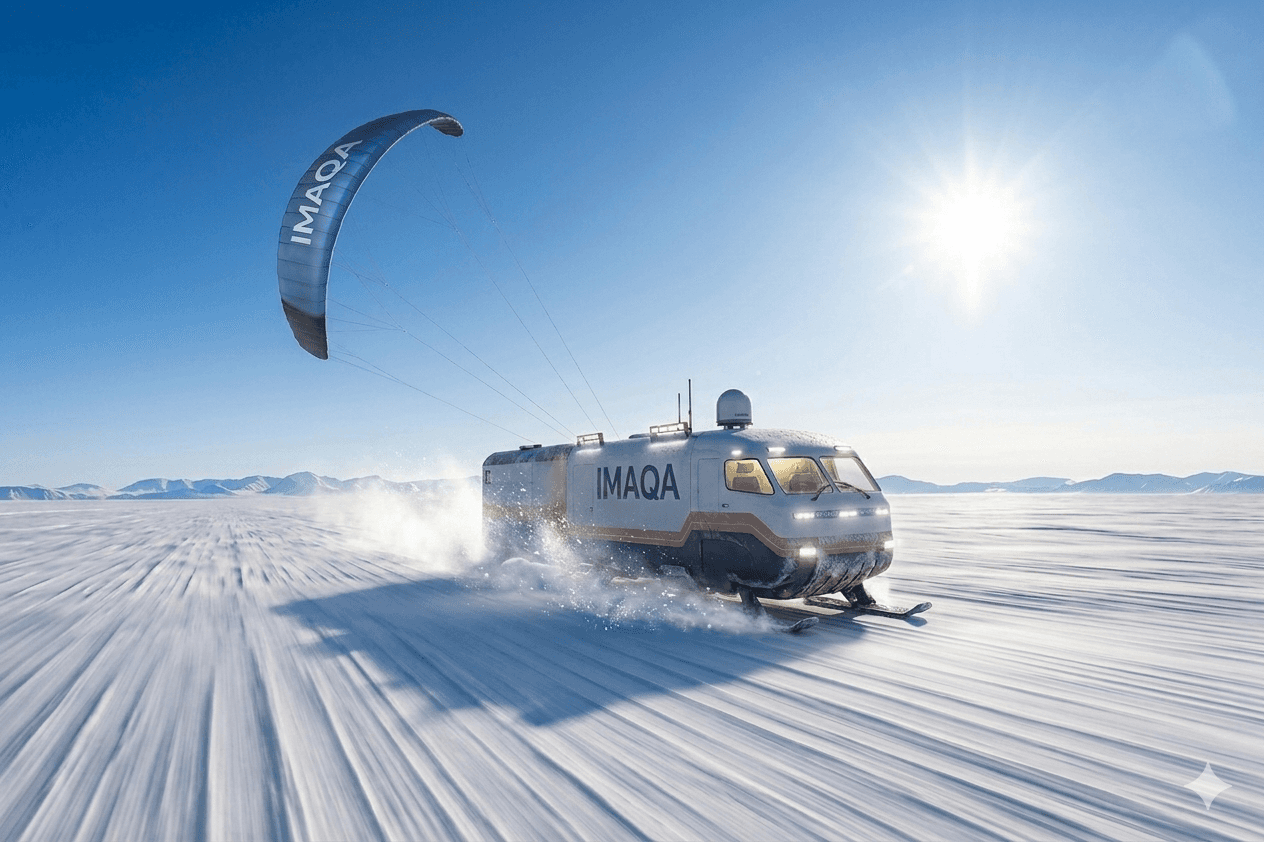

At this early stage, our objective is to collaborate with the scientific community to evaluate:

Whether IRIS addresses real unmet scientific needs

Which potential applications would provide the greatest value

Which technical and operational requirements should be prioritized

Your feedback will help determine whether this concept should move forward and, if so, which capabilities deserve further development.

Thank you for your time and expertise in shaping the future of polar research

Your Profile & Polar Expertise

Name

Organisation

Main Field of Expertise

Polar terrain experience level

A
B
C
D

Scientific Applications & Field Operations

Which of the following research activities would be relevant to your work?

Non Applicable
Low Interest
High Interest
Conducting long continuous transects
Towing a ground-penetrating radar over a long period
Deploying drones from a mobile base
Collecting surface snow or air samples with zero risk of contamination from vehicle exhaust
Measuring vertical atmospheric gradients and boundary layers
Carrying passive autonomous instrumentation arrays (i.e. AWS)
Mapping surface for satellite calibration / validation
Integrating sediment/ice drilling and coring systems

For each capability of IRIS listed below, what potential impact would it have on your research or field operations?

Non Applicable
Low Interest
High Interest
Transporting heavy payload or towing rigs
Moving long distances free from fuel logistics
Having a safe living workspace for field teams
Accessing a clean high-voltage electricity on the field to power instruments
Injecting renewable energy into a polar station's microgrid
Replacing airborne flights or tractor campaigns with a low-emission ground platform

Overall assessment

Overall, do you think a platform like IRIS addresses a real unmet need in polar science?

A
B
C
D

Please rank these advantages based on their value to your discipline (1 = highest priority, 5 = lowest priority):

Use the up and down arrow keys to change the rank.
1
1
1
1
1

Future Viability & Funding Realities

If such a platform existed today...

If IRIS meets your needs, how likely are you to include it as a primary logistical asset in your next grant proposal?

A
B
C
D

What is the realistic timeline for your research group to integrate a platform like IRIS into a funded field campaign?

A
B
C
D

In your opinion, what would be the non-negotiables criteria for a platform like IRIS to be genuinely useful for your field operations?

Shape the Future of IRIS

How would you like to stay involved with the development of the IRIS platform?